The devil is in the Detaille…

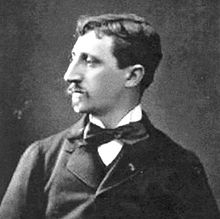
Apologies for the awful pun, but what first sparked my interest in Napoleonic history was visual. I have always been attracted to visual imagery, perhaps that’s why I am such a keen photographer, but specifically with regard to Napoleonic history it was the work in the second half of the 19th century of two French artists, Jean-Louis-Ernest Meissonier (below left) and Jean-Baptiste Édouard Detaille (below right).

Ernest_Meissonier Edouard_Detaille

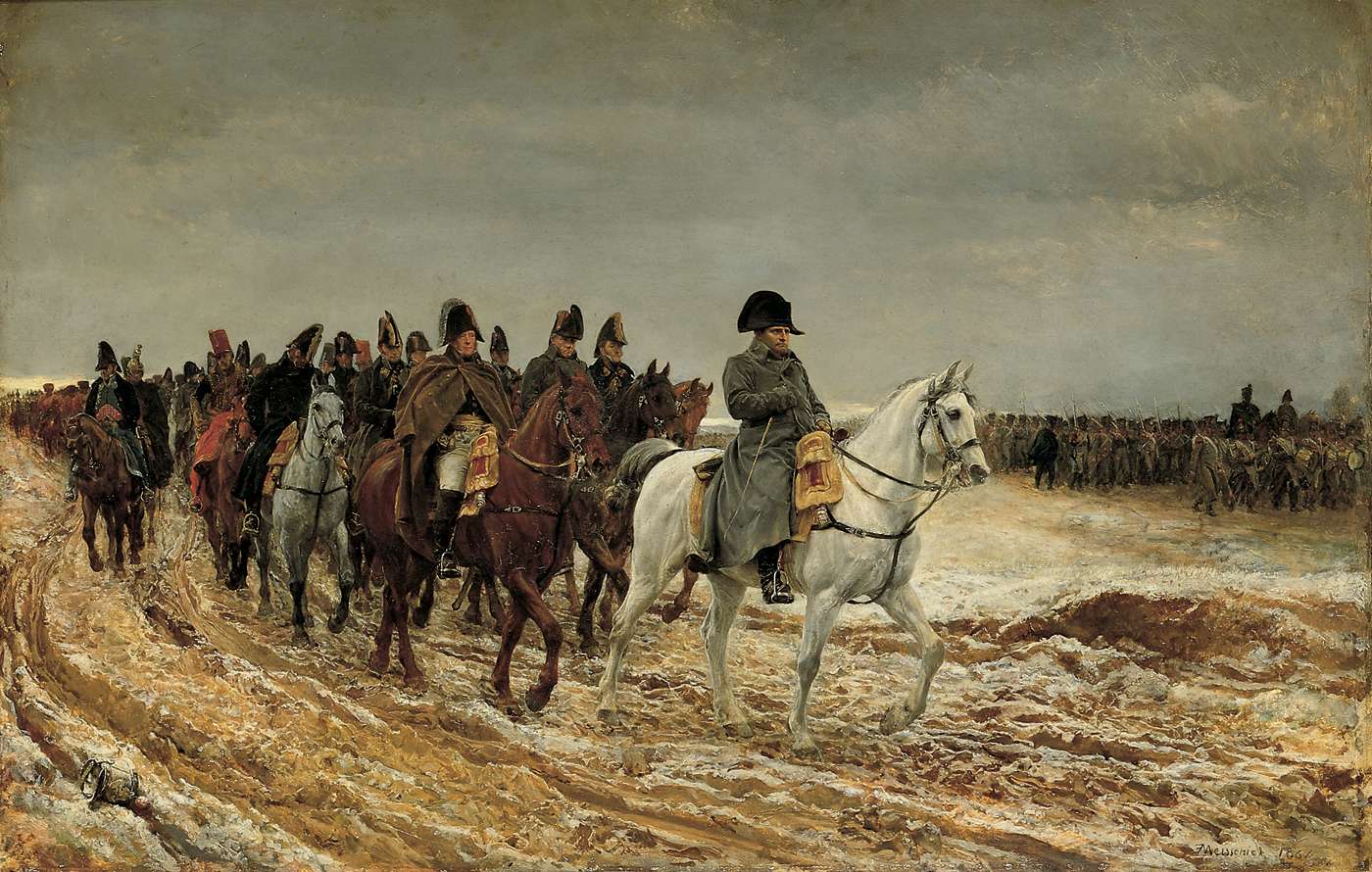
I remember still, when as a teenager I visited the Musée d’Orsay in Paris for the first time and saw Meissonier’s wonderful painting, below, “1814. Campagne de France (Napoleon and his staff returning from Soissons after the Battle of Laon)”.

1814-campagne-de-france

It is full of drama; Napoleon proud and erect (a bit of poetic license there perhaps as Bonaparte was a notoriously poor horseman) despite the defeat his army had just suffered against the Prussians. Behind him his staff ride silently, most so tired they can barely stay upright in their saddles. And all enveloped in a dark and gloomy melancholy (maybe that was the bit that appealed to the teenager).

I knew of the painting before I saw it first hand and I remember that I was surprised how small it is – about 76cm by 50cm. But it is filled with realistic detail that is characteristic of Meissonier’s pictures. Indeed, in his own lifetime, Meissonier was acclaimed for his mastery of fine detail and assiduous craftsmanship. The English art critic John Ruskin examined his work at length under a magnifying glass, “marvelling at Meissonier’s manual dexterity and eye for fascinating minutiae”.

When a seventeen year old aspiring artist, Édouard Detaille, came to him in 1865 to ask for an introduction to Alexandre Cabanel, another renowned artist with whom Meissonier was acquainted, the master looked at the boy’s work and offered to teach him himself. And Detaille turned out to be an eager disciple in the school of obsessive authenticity.

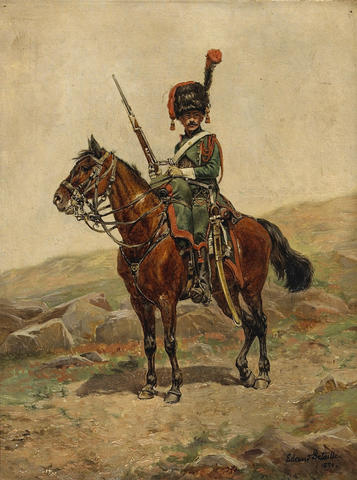
chasseur imp guardHe first exhibited at the Salon in Paris in 1867 and from that point didn’t look back. Like his teacher Detaille too was a master of the small canvas, as in this painstakingly detailed picture of a Chasseur of the Imperial Guard. The canvas is just 31cm by 24cm.

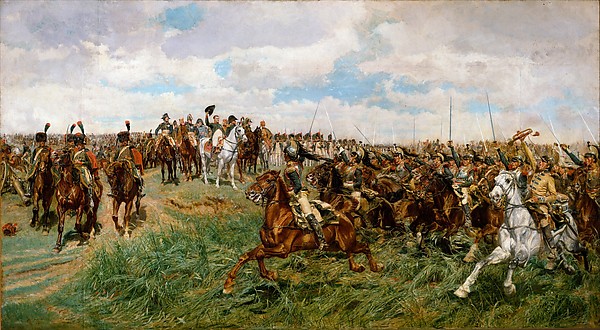
But occasionally both men splashed out to make big, bold statements on big canvasses. Here are two of my favourites, Meissonier’s “1807, Friedland” and Detaille’s “Vive L’Empereur”. I hope they thrill you as much as they do me.

1807 friedland

1807, Friedand

Vive_L'Empereur

Vive L’Empereur

Remembrance of times past…

Those of us lucky enough to have grown up in “peace time” since the Second World War are very familiar with the sight of hundreds, even thousands, of veterans of the armed forces parading on Remembrance Sunday past the cenotaph in Whitehall. They wear their medals with pride and they march past with fixed expressions that mask myriads of memories, good and bad.

But this is nothing new.

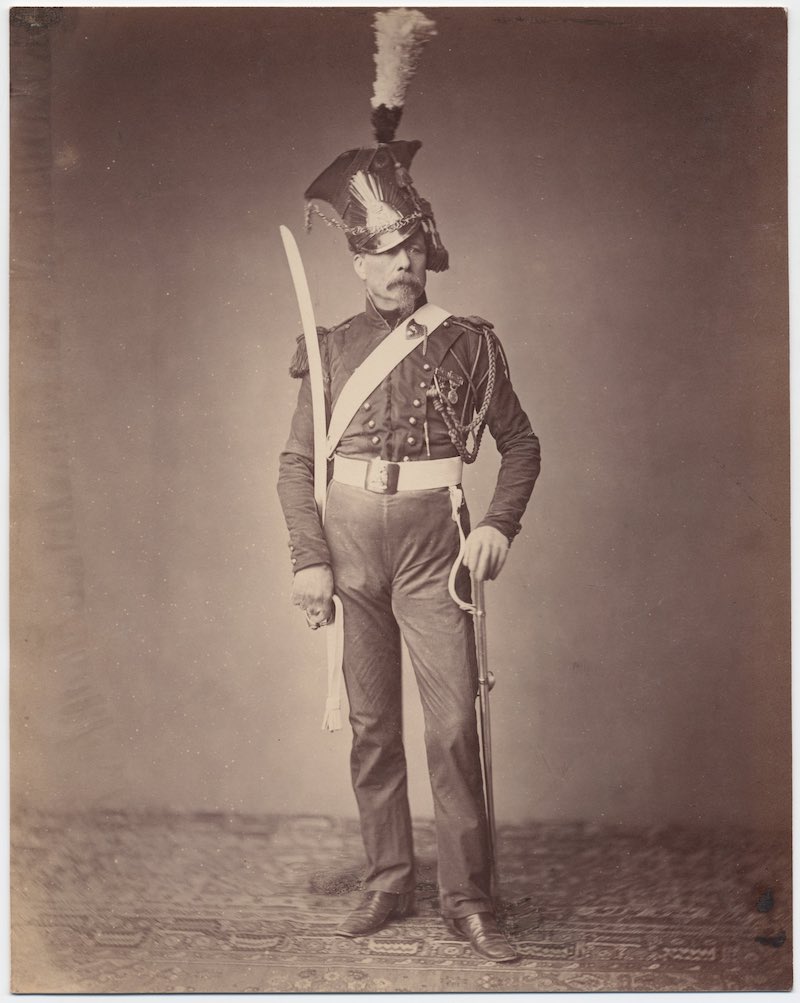
Monsieur Verlinde of the 2nd Lancers 1815

Monsieur Verlinde of the 2nd Lancers, 1815

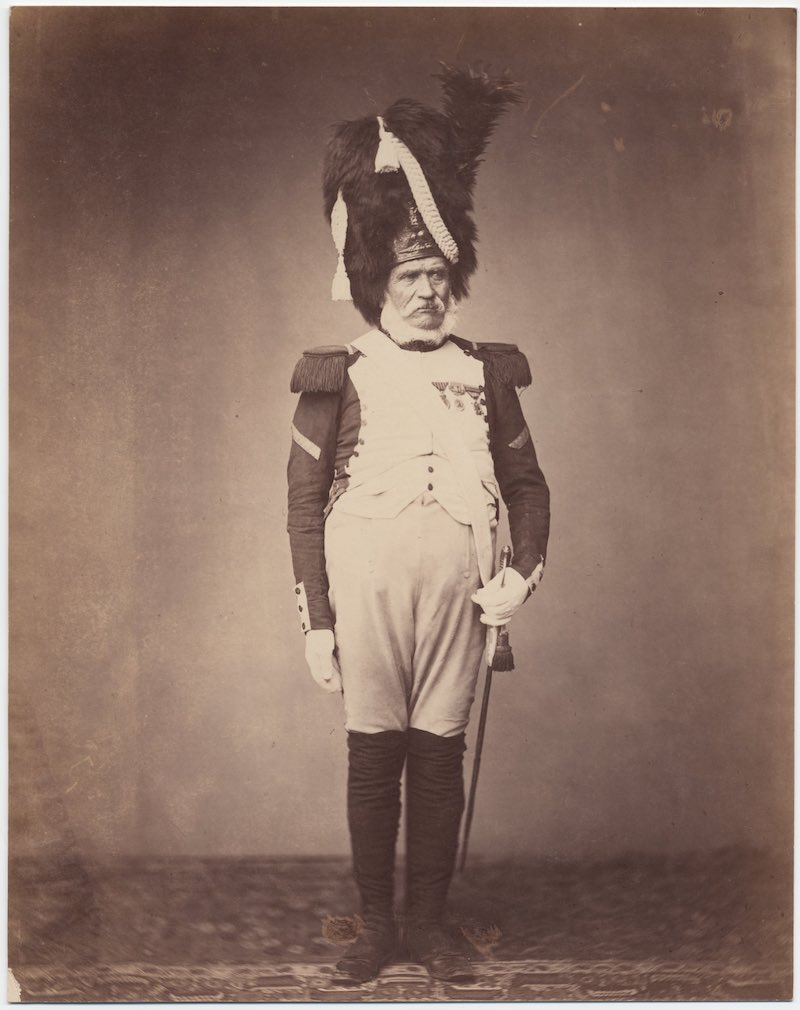
Grenadier Burg 24th Regiment of the Guard 1815

Grenadier Burg, 24th Regiment of the Guard, 1815

Back in May 1858, less than twenty years after the first complete practical photographic process was announced at a meeting of the French Academy of Sciences, French veterans of the Napoleonic wars were photographed after their annual reunion in the Place Vendome on the anniversary of the death of Napoleon.

It was customary for the old soldiers to turn out in the uniforms they had worn with pride and distinction all those years before.

Monsieur Mauban 8th Dragoon Regiment 1815

Monsieur Mauban, 8th Dragoon Regiment, 1815

They were in their sixties, seventies or even eighties, their waistlines had expanded in some cases and perhaps some clever tailoring had been required to enable them to dress still as they had as young men. But there was no alteration required to dress how they held themselves.

Though a little frail, blurring here and there telling its own story of how some found it a bit difficult to stand stock still for the lengthy exposures, nevertheless the pride of these men shines through.

moret and delignon

I am particularly taken with the image of Sergeant Taria of the Emperor’s Guard; as an old man he looked formidable. How much more so would he have been in his prime.

Sergeant Taria Grenadiere de la Garde 1809-1815

Sergeant Taria, Grenadiere de la Garde, 1809-1815

Serving from 1809-15 his experiences would have encompassed Aspern-Assling and Wagram, the horrors of the Russian campaign, the defensive campaigns of 1813-14 with France’s enemies pressing in from all sides, and finally the Hundred Days and that fateful, awful day of Waterloo when allied and French casualties were close on 50,000. I can’t imagine what his eyes must have seen.

All photographs are copyright of the Anne S. K. Brown Military Collection.

Elisabeth Louise Vigée Le Brun… an independent woman in a man’s world

When I was doing some research on the life of Catherine Talleyrand I inevitably came across the portrait of her during the time when she was perhaps the most famous courtesan in Paris; her 1783 portrait by Élisabeth Louise Vigée Le Brun.

I was surprised that the painter was a woman and I couldn’t think of any other women artists of the period. But it turns out that was hardly a surprise. In many European countries the national “academies” were all powerful in the artistic sphere. They were responsible for artistic training, exhibitions, and inevitably artistic promotion through being the arbiters of style. Membership of the academies was closely controlled and most were not open to women. For example, in France, the Academy in Paris had 450 members between the end of the 17th century and the French Revolution; only fifteen were women and, of those, most were daughters or wives of existing members.

vigee-le-brun-self-portrait-straw-hat-ng1653-c-face-half

Elisabeth Louise Vigée Le Brun self-portrait

Elisabeth Louise Vigée Le Brun was born in Paris on April 16, 1755. Her father was a successful artist who encouraged her interest in art. She had a natural talent and, when still a teenager, began to attract wealthy clients to have their portraits painted. When, still only 19 years of age, she was accepted into the painters’ guild of the Académie de Saint-Luc, this increased her professional exposure significantly. In 1776 she married Jean-Baptiste Le Brun, an artist and art dealer, with whom she had one daughter, Jeanne-Julie-Louise.

Vigée Le Brun soon became a popular portraitist among the French aristocracy and, in 1779, went to Versailles to paint her first portrait of Marie Antoinette. She became the queen’s favorite portraitist and painted her a total of 30 times over the next decade. It was through the queen’s influence that, in 1783, Vigée Le Brun was accepted into the Académie Royale de Peinture et de Sculpture, France’s most prestigious professional association for artists, which admitted very few female artists.

In 1789, with Revolution breaking out, Vigée Le Brun fled France with her daughter though her husband remained behind. For the next sixteen years she travelled widely, firstly in central Europe, then spent six years in Russia and finally two years in London before ultimately returning to France in 1805.

She had continued to work throughout this time, it being her only means of independent support, and her paintings were prolific; in her time in Russia alone she produced 44 portraits, her subjects including Tzar Alexander and his wife.

Back in France she suffered no apparent effects from being an emigre in exile and, within months, Napoleon had commissioned a portrait from her of his sister, Caroline, the wife of Marshal Murat. Though Vigée Le Brun describes the sittings as being nothing but a trial due to her sitter’s capricious temperament. In her memoirs she makes no bones about her annoyance. One day when she had been made to wait interminably for the lady to appear she commented to one of her attendants:

…loudly enough for her [Caroline] to hear, “I have painted real princesses who never worried me, and never made me wait.” The fact is, Mme. Murat was unaware that punctuality is the politeness of kings, as Louis XIV so well said.

Vigée Le Brun continued to paint until the late 1820s. She died at her Paris residence on March 30, 1842.

Carry On Napoleon…

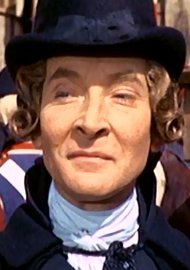
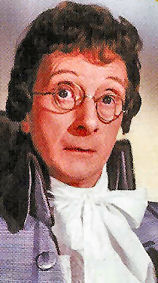
The more I read about the household of Napoleon, it seems to me more like the cast of a “Carry On” film rather than the inner circle of one of the most important figures in history. Drunken coachman, melancholic tailor, antagonistic chef, exotic bodyguard, gossiping valet. I can’t help but think of their parts being played by Messrs. James, Connor, Williams, Bresslaw and Hawtrey.

But they say fact is often stranger than fiction and the retinue of Napoleon seems to bear this out.

sid james

Drunk driver

Let’s start with Cesar, the coachman. He was a notorious drunk and it is something of a mystery why Napoleon put up with him. Perhaps because the great man always seemed to be in such a hurry Cesar’s manic driving somehow fitted the bill.

Yet it was just such driving, Cesar’s recklessness, that saved the life of Napoleon on Christmas Eve 1800. Josephine had persuaded him to attend a concert that evening and he set off in his carriage, driven as usual by Cesar, who was most decidedly full of the Christmas spirit. Josephine, her two daughters Caroline and Hortense, with Napoleon’s ADC Jean Rapp, followed in a second carriage a couple of minutes behind.

On the Rue St. Nicaise, plotters had set a bomb in a cart by the side of the road, held there at their behest by an unwitting girl. As the Consul’s escort trotted past the bomb’s fuse was ignited. Any other coachman, seeing the road partially blocked by the cart would have slowed to edge past the obstacle but not Cesar. Without a care in the world he raced the carriage past the cart that held the bomb. When it detonated Napoleon was safely round the corner in the Rue de la Loi. The bomb took out most of the block, bringing down the frontages of buildings on both sides of the street and killing nine innocent civilians. Nearly thirty more were injured. In the second carriage Hortense received a gash to her arm from flying glass and Caroline, who was eight months pregnant was badly shocked. It was the closest any assassination attempt came to succeeding.

kenneth connor

Down-trodden tailor

Moving on, I would guess that Napoleon, for his evening at the concert, would not have dressed up. His simple taste in clothes was the bane of his tailor’s life. Bastide, the tailor, was the make-do-and-mend flunky. Napoleon was frugal and spent as little as possible on his wardrobe, preferring simple uniforms and clothes that were comfortable and practical… and would last for an eternity. It was Bastide’s job to keep them serviceable. Even when Napoleon did splash out on something elaborate, such as his coronation robes, poor Bastide never got a look in. Those jobs were always farmed out to someone famous. So the lot of the great man’s tailor was not a happy one.

kenneth williams

Supercilious chef

Also often unhappy, but more prepared to make a fight of it, was Napoleon’s chef, Dinan. Formerly the chef of the one of the Bourbon dukes, he considered his culinary inventions to be works of art. But Napoleon’s view of food was purely functional. He considered food as fuel and little more. His tastes were simple and he wolfed down his food. Meals were sprints, over and done with in twenty minutes. But Dinan was stubborn too and persisted in producing his multiple courses, rich sauces and lavish desserts. He also took it upon himself to make executive decisions about the Emperor’s menu… big mistake. When he substituted a strong garlic sausage that was a particular favourite of Napoleon’s because he thought it was too vulgar that was a decision too far and Napoleon let rip at his chef. In the ensuing argument Dinan threatened to resign but compromise was finally reached. The maestro agreed to give the Emperor more of the food he preferred while Napoleon agreed to the multiple courses though he tended to leave more than he ate.

charles hawtrey

Self-important valet

Witness and chronicler of all of his was Constant, Napoleon’s valet. His memoirs read like a gossip’s charter but he was faithful to Napoleon for many years. Though I can’t help but think he must have been the sort who imagined their own status was somehow a reflection of their master’s import.

bernard bresslaw

Intimidating bodyguard

And finally their was Roustam Raza, the massive bodyguard. Armenian by birth, he was a slave in the service of the Sheik of Cairo when he was presented to Napoleon as a gift. From that time the giant bodyguard was never more than a few feet from his master. Always attired in traditional Mamluk dress – plumed turban, baggy trousers, embroidered jacket and massive curved scimitar. When they travelled by coach Roustam sat beside Cesar driving the carriage (worse luck for him). At night he slept outside Napoleon’s bedroom, lying across the door like some devoted guard dog.

He accompanied his master on all his great campaigns, including Russia where he found the cold intolerable. In the final months of the empire with Napoleon falling back on Paris he fought bravely in numerous engagements.

Although he finally broke with Napoleon when the Emperor was exiled to Elba, a decision which Napoleon found more hurtful than many of the betrayals he experienced at that time, he was on hand when in 1840 his old master’s body was returned from St. Helena for re-interment in Paris.

Near bald, near blind, near brilliant…

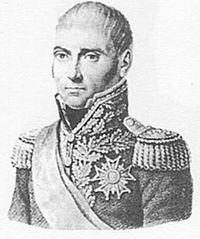
davoutLouis Davout (or Davoust as it was commonly written during his lifetime) was the son of minor nobility from Auxerre. Following an education at the military academy in Auxerre and then the École Militaire in Paris he was appointed to a junior officer post in the Royal-Champagne Cavalry Regiment, but on the outbreak of Revolution he eagerly embraced its principles.

Transferring to a volunteer infantry regiment he distinguished himself at the battle of Neerwinden in 1793 and, by the age of 23, was promoted to General of Brigade. Following further service on the Rhine front between 1794-97, he accompanied Bonaparte on his Egyptian expedition where he fought at The Pyramids and Aboukir.

On his return he missed the 1800 northern Italian campaign in which his friend Desaix was killed saving Bonaparte’s bacon at Marengo. But Bonaparte showed his confidence in him by promoting him General of Division and giving him command of the Consular Guard. Now Davout would become Napoleon’s staunchest supporter.

In 1804, when Napoleon became emperor, Davout was the youngest of the generals promoted to Marshal. His youth raised eyebrows and sparked not a little jealousy in some quarters but Napoleon would be proved to be a great judge of character. At this point Davout had had command of III Corps for a little over a year and was in the process of transforming it through discipline and training into the finest unit in the French army and setting the seed for his sobriquet, “The Iron Marshal”. He was harsh, difficult to get on with and had no patience with those who tried to take the easy way out. But he was honest and always mindful of the well-being of his men. These attitudes would mean he would get on well with few of his fellow marshals.

At the Battle of Austerlitz in December 1805, after a forced march of forty-eight hours, III Corps was the anvil upon which Bonaparte pulverised the Russians and Austrians, but it was the following year at Auerstadt that he showed his true brilliance when his single corps defeated a Prussian force double the size of his own. In a hard fought day he battled the bulk of the main Prussian field army to a standstill and then swept them from the field in one of the greatest military displays in history.

Unfortunately for him, Davout’s victory at Auerstadt was on the same day as Napoleon’s victory at Jena a few miles away and of course the subordinate’s victory was played down compared with the Emperor’s. Though Napoleon recognised the scale of his Iron Marshal’s victory, and when it came time to bestow on Davout a ducal title, it was as the Duke of Auerstadt.

Further service followed for Davout; commanding well at the battles of Eylau, Eckmuhl, Ratisbon, and Wagram, being made Prince of Eckmuhl in 1809. And all of this battle leadership despite barely being able to see his hand in front of his face.

On he went, performing well during the ultimately disastrous Russian campaign of 1812. He beat Bagration at Mohilev and commanded well at Smolensk and Borodino. However, the wheels came off during the infamous retreat from Moscow. Never popular with some of his senior colleagues, he had made particular enemies of Berthier, Jerome Bonaparte, and Murat who was Jerome’s brother-in-law. Together they conspired to turn Bonaparte’s opinion against Davout and he was replaced by Ney in command of the rearguard.

The following year he was given the task of holding Hamburg and put up a sterling defence, defying the siege for more than a year, only relinquishing the city when Napoleon was toppled in 1814.

During the Hundred Days when Napoleon returned from Elba, Davout rejoined him but was inexplicably given a ministerial post in Paris rather than a field command.

If Napoleon had had Davout with him then maybe the results of the campaign could have been very different. I doubt Davout would have wandered aimlessly through the Belgian countryside with 30,000 troops as Grouchy did on the day of Waterloo. He would have marched to the sound of the guns and who knows what difference that force would have made under the command of the Iron Marshal.

Beautiful, dimwit, survivor, princess… Catherine Talleyrand

In researching the background to a follow up to my novel Bitter Glory, I have become interested in some of the female characters who populated Napoleonic high society. I think several will end up as the subjects of posts here but I have chosen Catherine, the wife of Napoleon’s Foreign Minister, the arch schemer Charles Maurice de Talleyrand-Périgord.

Catherine Noele Worlée was born in India in 1762, in the hot and sultry southern region of Tamil Nadu, the daughter of a French colonial administrator. It is undoubtedly fanciful but I can’t help but think of that region of crazy heat, sultry humidity, exotic spices and full of contrasts as some kind of metaphor for the lady’s character.

For Catherine was just 15 when she became mistress of George Francis Grand, an English civil servant, shortly after her family relocated to Chandannagar. They were married the following year, 1778. Yet within a year of their marriage an outraged George Grand had caught his wife in flagrante with Sir Philip Francis, a member of the supreme council of Bengal.

For the next three and a half years Catherine lived with Philip Francis… and his wife in an apparently amicable arrangement. But in 1782, for reasons that are unclear Catherine left India and set sail for France. In Paris over the next ten years she moved through a series of lovers each either wealthier or better connected than the last; bankers, politicians, aristocrats. When Vigee Le Brun painted her portrait here she was one of the most famous courtesans in Paris.

catherine_princesse_talleyrand_001

But in 1792, with the horrors of the Terror just around the corner, she fled Paris for London and the patronage of more influential lovers.

She remained in London for three years, returning to Paris in 1795 after the fall of Robespierre and his Committee of Public Safety and the establishment of the more moderate Directory. A year later she had been introduced to Talleyrand and by 1797 they were lovers, Talleyrand having set her up in her own house at Montmorency.

They were certainly an odd couple. Perhaps it was the attraction of opposites. Talleyrand was urbane, aristocratic, fiercely intelligent, ruthlessly calculating and Catherine was, frankly, none of these things. She was of relatively low birth and had little formal education and she is mocked in various memoirs as being a dimwit; her social faux pas became the stuff of legend in polite society. The story of her mistaking the French traveller, writer, and artist Vivant Denon for Robinson Crusoe and insisting over dinner on talking about how he met Friday may be apocryphal but it gives an idea of the stories about her that were doing the rounds. But, perhaps Talleyrand had had his fill of the imperious Germaine de Stael and her ilk.

And let’s face it, Catherine had other attributes; her beauty was incontestable. With blue eyes, luxurious masses of blonde hair, perfect skin and incomparable grace, she was acknowledged as one of the reigning beauties of the time.

Through Talleyrand’s influence Catherine finally secured a divorce and in 1798 she had moved into his Paris residence where the celebrity couple of the age embarked upon a glittering round of social engagements. Invitation to the Hotel Gallifet became the most sought after ticket in Paris.

In 1802 the couple married at the urging of Napoleon Bonaparte who did not appreciate his chief minister living openly with his mistress, but after their marriage the couple began to drift apart, her husband ultimately giving her enough money to live luxuriously in London.

The Princesse de Benevente, for she kept her husband’s title, moved back to Paris to live out the last few years of her life and she died there in 1834.

Standard opinion of Catherine is that she was stupid but I’m not so sure. In an age where women were most distinctly second class citizens she rose from obscurity to fame and fortune using whatever talents and attributes she had. She ended up a princess, fabulously wealthy and had married the man who, after Napoleon, was the most powerful in France. Not bad for a provincial nobody.

The Duellists

One of the more bizarre sequences of events during the Revolutionary and Napoleonic periods was the protracted series of duels fought between two officers, Fournier and Dupont, spanning 19 years; the inspiration for Joseph Conrad’s novel, The Duel, and subsequently Ridley Scott’s 1977 film, The Duellists (below).

duellists
It all started in 1794, with offense taken by Fournier to an innocuous message delivered to him by Dupont at the orders of their general. By that time Fournier was already notorious as an inveterate duellist apparently relishing the opportunity for death within the unimpeachable “rules” of the duel. When he called out Dupont and his challenge was accepted it set in train a sequence of duels between the men that would stretch to 1813.

Fournier (below), on whom I based the character Boulancy in my first novel, Bitter Glory, had an erratic military career, at one extreme garnering plaudits for his fearless demeanour on the battlefield, but at the other bordering on disgrace for his behaviour off it. On more than one occasion it was only the protection of his friend Lasalles, that paramour of hussar leaders, which saved him from ignominy. Yet his valour in battle was undeniable as illustrated by his impeccable leadership of the 12th Hussars during the Marengo campaign. His personality seems equally a bundle of contradictions, on the one hand open and generous, but a merciless killer bordering on psychotic.

Général_FRANCOIS_FOURNIER_SARLOVEZE

But as they say it takes two to tango and Dupont was a willing participant in the duels. They even agreed a contract between them which formalised the conditions for their meeting:

  • As often as MM. Dupont and Fournier find themselves within thirty leagues of each other, they shall meet half-way between, for a duel with swords.
  • If either of the combatants finds himself restrained by the exigencies of the service, the other shall make the entire journey, in order to effect a meeting.
  • No excuse, except such as may grow out of the exigencies of military duty, shall be admissible.
  • Etc, etc.

They also exchanged correspondence, with Fournier once congratulating Dupont on his promotion so that they were once again of the same rank and could continue their duels. After all, it was not honourable to fight someone of a lower rank!

The duels came to an end in 1813 when a duel with pistols was arranged in a walled copse. Dupont managed to entice Fournier into shooting precipitately, wasting his shots. No mean feat as Fournier was a crack shot who reputedly used to amuse himself and his comrades by shooting the pipes out of soldiers’ mouths. With no shots left Fournier coolly left his cover and prepared himself for death but Dupont declared that he had Fournier’s life in his hands and the next time they met he would have two free shots. Whereupon he left and duels were ended.

As a little footnote to this, the identity of Dupont is not too clear. Most of the early sources are unclear and stick to the use of his surname only. Wikipedia names him as Pierre Antoine Dupont de l’Etang (below) and this is adopted by many other reports and articles but I’m not convinced for a few reasons:

General_Pierre_Dupont_de_l'Étang

  • Dupont was a very common name
  • He was eight years older than Fournier and joined the army seven years earlier
  • Dupont wanted to end the duels as he was about to marry. The final duel was in 1813 but Dupont de l’Etang married in 1804

Not conclusive, but perhaps cause for doubt.

The odd couple…

One of the things that interests me for my own historical fiction is incorporating the more unusual snippets of facts that are known of real figures from the history of the period.

For example, Jean Bernadotte who rose from fire-breathing revolutionary, joining the army as a private, to become Marshal of the Empire and then King of Sweden had a tattoo on his arm that read “Death to kings”…. It would prove embarrassing later in life!

Or André Masséna who took campaigning with him in Spain his latest mistress, an eighteen year old ballet dancer from the Paris Opera, for whom he had especially fetching hussar uniforms made.

lannes goethe

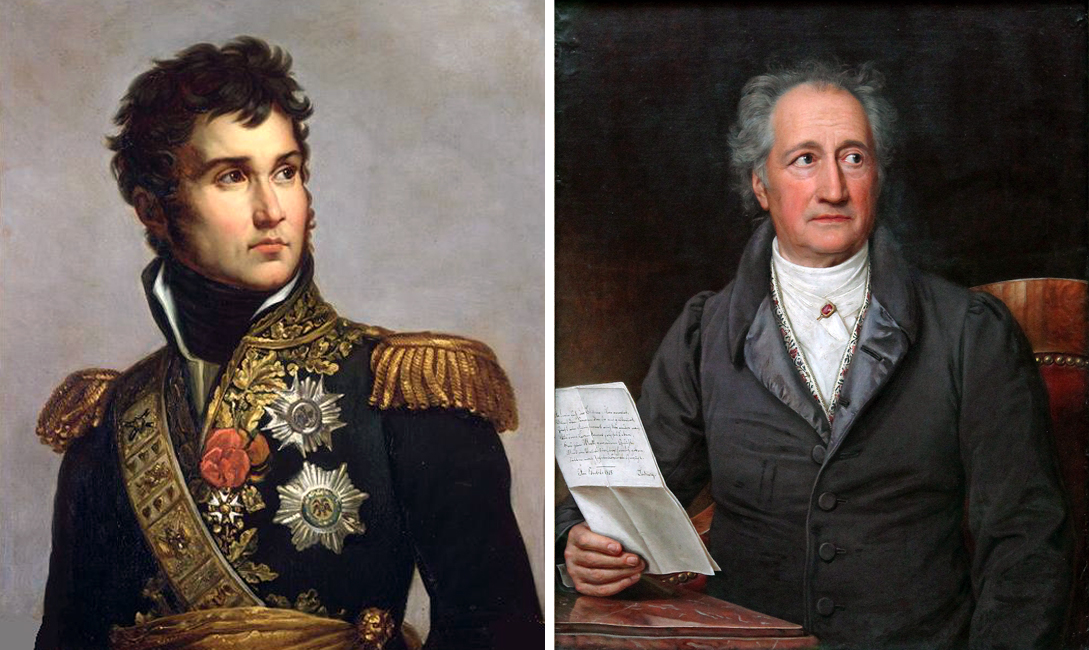
Or this one which I will definitely be using, relating to my favourite of Napoleon’s Marshals, Jean Lannes (above left). He was a no nonsense fighting general, always leading from the front, brave to the point of recklessness and with a temper that could raise blisters on granite. From poor working class stock in Gascony his education was rough and ready and his language choice at best; the language of the barrack room rather than the ballroom, and certainly not of the intellectual salons of Paris.

Yet, after the French victory at Jena in 1806, when French troops poured into the city of Weimar, chasing the retreating Prussian army it was none other than our Lannes who came to the aide of the poet Goethe (above right) who lived in the city. Fearful that the rampaging troops would destroy his library he sought protection from the French commanders in the city. None of them paid him any attention until Lannes heard of it whereupon he stationed guards around Goethe’s house to prevent it being pillaged. The writer invited Lannes to dine with him as a token of thanks and perhaps the attraction of opposites somehow came into play because the two thereafter became friends. I can only imagine that their conversation must have been really quite strange.

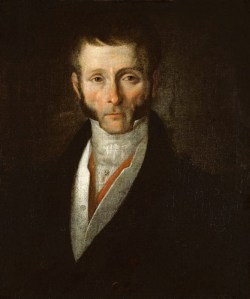
Everyone’s favourite villain, Joseph Fouché

fouche-ecole-francaise1

Church educated and brutal dechristianiser… Radical Jacobin and betrayer of Robespierre… Directory minister and betrayer of Barras… Architect of the coup d’état of 18 Brumaire and betrayer of Napoleon…

Joseph Fouché was the ultimate survivor (rivalled only by Talleyrand), emerging unscathed when each regime he allied himself to was destroyed. Remaining in positions of influence when his loyalties were constantly doubted. As the ever insightful Madame de Rémusat observed, he was an adept at making himself a necessity.

Contradiction, duplicity, deceit, brutality, ruthlessness, self-serving aggrandisement; these were his watchwords. If he had a moral compass the needle would have spun like a bicycle wheel.

A ready-made villain for any story set in the turbulent times of the Revolutionary and Napoleonic periods. I was keen to use him as such in my own novel, Bitter Glory. But how well do the facts stack up against the appalling reputation he acquired through his career.

Fouché was born in Nantes in 1759, given a good education by the Oratorians who had taken over religious education in France since the ousting of the Jesuits, and destined for a career as a teacher within that order.

All that changed with powder keg of revolution exploding across France.

Politicized, Fouché joined the Jacobins and became a friend of Maximilien Robespierre. When royalist supporters rose in La Vendée he was sent there with almost dictatorial powers to crush the revolt which he did with such brutal efficiency that he was immediately promoted to the post of Commissioner of the Republic in the département of the Nièvre. There the former Oratorian launched the policy of dechristianisation, ransacking churches and sending their valuables to the Treasury.

When revolt broke out in Lyon Fouché was sent there with almost two thousand of the Parisian Revolutionary Army to restore order.  In reality he initiated a massacre – various sources describe scenes of groups of men blasted with grapeshot, firing squads and an overworked guillotine.  Estimates put the number of citizens executed at over 1800 from late 1793 to April 1794 when he returned to Paris.

As he put it: The blood of criminals fertilises the soil of liberty and establishes power on sure foundations.

Back in Paris, conflict with his former friend Robespierre led to the Jacobin leader trying to oust Fouché from the Jacobin Club, at the time tantamount to a death sentence, but with the support of Barras, Fouché turned the tables. It was Robespierre’s head that fell to Madame Guillotine.

With his fall, moderates came to dominate the ensuing regime, the Directory, and Fouché was cast out of favour but three years later he was back, working for his benefactor Barras as ambassador in Milan and then as minister of police.

But already Fouché could detect the wind of change and the new rising star; a young general from Corsica. With barely the skip of a heartbeat he transferred his allegiance from Barras to Bonaparte and was instrumental in facilitating the coup d’état of 18 Brumaire.

Thereafter, through the course of the Consulate and the subsequent Empire, Fouche was in and out of favour with Bonaparte who recognised he needed the resources of his sinister minister of police but was ever wary that he had garnered too much power than was healthy for a subordinate.  Every few years he would be bounced out of office for overstepping the mark but would never be entirely disgraced by Bonaparte who still maintained an eye for the future and Fouché’s potential usefulness.

In 1802 he was removed from office when Bonaparte suspected he was unduly protecting his former Jacobin friends but he was brought back in 1804 after his spy network had been rather more useful than his successor’s in thwarting the Cadoudal plot.  After making independent overtures to the British for peace he was sacked by a furious Napoleon in 1810 but gradually worked his way back into favour, if not trust, over the next three years.

But in 1814, when he saw the writing on the wall for the Empire, and the Allies closing in on all fronts, he opened negotiations with the royalists. However, not getting any satisfaction from them in the short term he sided once again with Napoleon when he broke out of Elba for the Hundred Days. Even then, he made contact with the Austrian Metternich, evidently ensuring he could play either side depending on the outcome.

This strategy worked because, following Waterloo, he found his services in demand still. Talleyrand, that other notorious survivor, became the prime minister of the newly restored Kingdom of France, and he named Fouché as his minister of police. So the regicide, the man who had urged the execution of Louis XVI so vigorously, became a minister for his brother, Louis XVIII.

He now initiated a campaign of terror against real and imagined enemies of the crown but by 1816 his royalist masters tired of him and dismissed him for the last time. He was proscribed and exiled.

Fouché, the father and mother of secret police forces the world over, died in Trieste four years later.

“We can just eat up our boots!”

1800_siege of genoa

“Said the soldiers of Masséna, rationed to excess during the siege of Genoa.”

Well, using the near starvation of the garrison and population of a besieged city as an advertisement to sell biscuits may not seem very tasteful to our modern sensibilities; it would be rather like Nestlé using African famine photographs to sell chocolate, but it goes to show how famous the siege of Genoa became. The biscuit advert dates from almost a hundred years after the siege but it was still evidently redolent in the popular consciousness.

The reality of the episode though was grim almost beyond description.

When Austrian forces attacked the French on the Piedmont front in the spring of 1800 pretty much everything went wrong for the French army And by late April they were divided and at bay. General Suchet was desperately defending the line of the River Var and General Masséna was bottled up in the coastal city of Genoa, beset by Peter Karl Ott commanding 40000 Austrian troops to landward and the Mediterranean Squadron of the Royal Navy commanded by the dour Scotsman Admiral Lord Keith, blockading from the sea.

From a defensive standpoint there were few places better set up for defence than Genoa. The old city walls provided a last line of defence from the landward side but the main advantage for the defenders was the natural topography. Genoa was surrounded by hills which had been turned into an unbreachable barrier, the key summits crowned by forts linked by walls and bastions, all able to provide supporting fire to their neighbours in the event of attack. The Austrians attempted local attacks on various points around the perimeter but all were bloodily repulsed. The French too were not idle. Masséna kept up an active defence with regular sallies out of their defensive lines to counter attack their besiegers. But this was an expensive tactic. Casualties were high and in one Attack, Soult, Masséna’s second in command was captured.

From the sea, the British bombarded the city using bomb ships commandeered from the Kingdom of Naples but otherwise simply stood offshore preventing any kind of relief. The waterside defences were too strong for them to risk trying to force the harbour and when the allies heard of the parlous state of the food supplies in the city they opted for sitting back and letting General Hunger fight for them.

For generations the rulers of Genoa has managed the distribution of food in the city. For example, all bread was baked in central bakeries rather than by small private bakers. Historically, this had enabled the rulers to control the population, but mismanagement and corruption had led to the main food depots in the city being run down and poorly stocked even at the start of the siege. Within days food was in short supply. Strict rationing was enforced on the garrison and the civilian population were provided with little more than starvation rations immediately.

With the infirmaries rapidly overflowing and the mass grave pits behind the church of Carignan filling as quickly as they could be dug, Masséna realised all too well that he was sitting on a powder keg ready to explode. When plague broke out in the city it was the last straw for the population and open revolt broke out. Masséna had to withdraw troops and guns from the defences to suppress the civilian rioters which they did with brutal efficiency.

Though tainted with a reputation for venality and corruption, Masséna was a rock throughout the siege, though the strain in him personally was immense. He insisted he and his staff had the same rations as his soldiers; bread that was half saw dust and meat that came from God knows where. Horses, dogs, cats and rats all went in the pot. Various sources have claimed that during the siege he aged visibly and his hair went completely white.

But he knew that the longer he held on in Genoa, the more time he would be tying down half the Austrian field army in northern Italy and the more time Bonaparte would have to spring his trap on them, descending behind them from the Alpine passes.

But by the beginning of June, even Masséna knew the end was near. He opened negotiations with the Allied command for evacuating the city; he steadfastly refused to contemplate the use of the word surrender and threatened to fight to the bitter end if the Allies insisted on formal surrender. By this time too the Allies were under pressure to end the siege. News of Bonaparte’s offensive across the Alps had reached them and they readily conceded to Masséna’s demands to be allowed to march out of the city and rejoin the rest of their army at the Var.

Even now the wily French commander strung out the negotiations for a couple of days but finally, on June 6th, with standards flying the bedraggled remnant of his scarecrow-thin army marched out of the pestilential city.

Eight days later Bonaparte won his famous victory at Marengo that decided the campaign. Ott’s men were too late to rejoin the rest of the Austrian field army and they crashed to a devastating defeat. No one could have foreseen the long term consequence but the subsequent Treaty of Lunéville sealed the fate of the Holy Roman Empire itself.

Not long after the victory Bonaparte wrote to Masséna, “I am not able to give you a greater mark of the confidence I have in you than by giving you command of the first army of the Republic [the Army of Italy].”

The Austrians too recognised the importance of Masséna’s tenacity during the siege, after Marengo their chief-of-staff  declared firmly, “You won the battle not in front of Alessandria but in front of Genoa.”